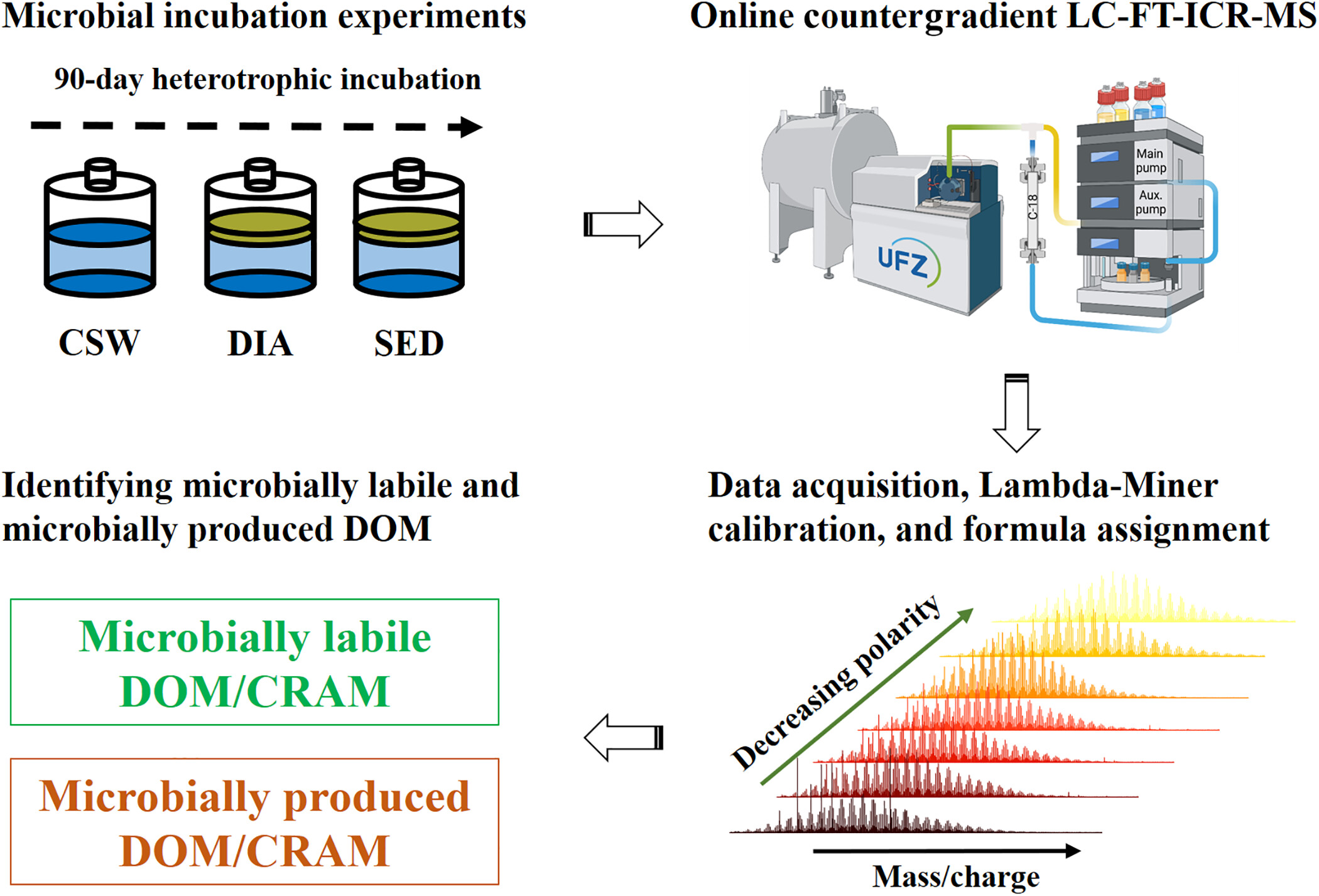
Marine dissolved organic matter (DOM) is one of Earth’s largest long-term carbon reservoirs, critical to the global carbon cycle. A research team led by Prof. HE Ding from the Department of Ocean Science at HKUST has made significant breakthroughs in understanding DOM. They identified biorefractory carboxyl-rich alicyclic molecules (CRAM) and challenged previous assumptions about their stability. Utilizing advanced ultrahigh resolution mass spectrometry, the team demonstrated that CRAM bioavailability is influenced by molecular polarity, with lower-polarity CRAM being preferentially degraded. Their findings revealed that microbial transformations produce higher-polarity CRAM, which may persist in marine environments, providing crucial insights into the complexity of marine organic carbon cycling.
Science Advances Vol 11, Issue 28
DOI: https://www.science.org/doi/10.1126/sciadv.adw1148